

Experts question Washington’s suggestion that it can end Beijing’s dominance of sector within two years
The US has claimed China’s dominance over rare earths is coming to an end, with Treasury secretary Scott Bessent telling the Financial Times in October that Beijing’s leverage over the metals would last no more than 24 months.
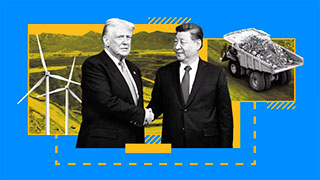
China last month tightened sweeping export restrictions on rare earths and magnets, used in everything from electric cars to refrigerators, although the country’s leader Xi Jinping agreed a temporary reprieve with US President Donald Trump under which the controls will not apply for another year.
The rise in trade tensions has focused US policymakers’ minds on the country’s reliance on China for the minerals, with a race under way to develop new sources and processing facilities.
But some observers have questioned Bessent’s two-year timeline, given the extent of China’s grip on the sector and the complexity and expense of building the mines and processing that will be needed to replace Chinese suppliers.
“Promises of a year or two are either naivety or spin,” said Tim Puko, director of commodities at the Eurasia Group consultancy. “There is no realistic way for the US to hit that target now.”
What does the Trump administration want?
After half a century of under-investment and tighter environmental and permitting regulations, Washington is injecting funding into rare earths and critical mineral companies in the hope of catalysing the sector domestically. It has also sought to corral allies including Australia and Japan into rare earths deals.
“There’s a much greater understanding that this is a real issue geopolitically and also from a national security perspective and that this needs to be solved irrespective of temporary reprieves,” said Thras Moraitis, chief executive of Serra Verde, which is developing a Brazilian rare earths mine with US government funding.
Washington and Canberra in October agreed to invest more than $3bn together in critical mineral projects within the next six months.
After signing the deal with Australia’s Prime Minister Anthony Albanese, Trump declared that “about a year from now we’ll have so much critical mineral and rare earth that you won’t know what to do with them”.
Japan’s new prime minister, Sanae Takaichi, said on Thursday that the country and the US would jointly study developing rare earth mining in the waters around Minamitori island in the Pacific, Reuters reported.
How realistic is the US plan to diversify supplies from China?
Building a major new rare earths supply chain that cuts out China will take many years, experts say, making Bessent’s two-year timeline to build self-sufficiency highly optimistic.
The ratcheting-up of Chinese export controls has, however, helped galvanise the US and its allies, which could accelerate the pace of development.
Bringing a new mine to life is lengthy, risky and capital-intensive. Newly discovered deposits are studied for years before a final decision to build a mine, while projects are often slowed by long permitting processes. Raising the money to finance a mine is also challenging, meaning initial timelines frequently slip.
“Twenty-four months for a full detachment from the supply of Chinese rare earths and magnet materials is ambitious, and would require vast amounts of finance, permitting and education of the workforce to accomplish,” said David Merriman, research director at Project Blue.
Australia’s Lynas, the largest rare earths producer outside China, has warned that there was “significant uncertainty” about its planned processing facility in Texas after wastewater management and permitting challenges added to costs.
Another question is how a new supply chain would survive financially. Even if mines, plants and factories are built, operators will need to compete with low-cost Chinese rivals.
Belgian chemicals group Solvay plans to start producing heavy rare earths in small quantities from 2026. But to “kick-start the value chain in Europe”, the group would need buyers and governments to “make sure that this investment makes sense and is profitable”, said CEO Philippe Kehren.
Meanwhile, German magnet maker VAC’s chief executive Erik Eschen told the FT he was concerned that China’s restrictions had led to a magnet stockpile that could “flood the market” and drive down prices should there be a US-China détente.
What progress has been made?
The US has few of the miners or refiners the administration wants, with only two players producing at scale, Energy Fuels and MP Materials.
They have both pledged to materially increase their production of neodymium-praseodymium (NdPr), a light and commonly used rare earth compound that goes into magnets.
Last year the US imported about 7,000 tonnes of permanent magnets, according to import data. However, US consumption far exceeds that — with the motor industry alone requiring 42,000 tonnes a year.
Two magnet makers in the US, Vulcan Elements and Noveon Magnetics, have said they plan to reach capacity of at least 10,000 tonnes a year. Vulcan said it would reach “significant volumes” by 2027, while Noveon’s current capacity is 2,000 tonnes.
A unit of Germany’s VAC, eVAC, expects to start shipping products this month from its new rare earth permanent magnet factory in South Carolina. “I want to ramp up before Christmas,” Eschen said, noting that carmaker General Motors was a customer.
Other projects are waiting in the wings.
Among rare earth processors, Ucore Rare Metals broke ground on its separation plant in Louisiana this year and said in August it expected to be producing small quantities of material in 2026.
While a swath of companies in the US or with ties to the country have pledged to develop rare earth projects across mining, processing and magnet manufacturing, industry insiders say most remain speculative or uneconomic without stronger price signals.
“I do think that there’s room for a lot of other players and a lot of other supply, but to get to that in five or 10 years, you’re going to need materially higher prices,” said MP Materials chief executive James Litinsky.
What deals have been struck?
AUGUST ’25:
Energy Fuels Inc, which produces rare earth oxides, announced a deal to supply magnet maker Vulcan Elements with “light” and “heavy” rare earth oxides “sourced exclusively from US mines”.
AUGUST ’25:
Ucore signed a 10-year supply deal with Critical Metals Corp for rare earths from the mine US group CMC is developing in Greenland for Ucore’s processing facility in Louisiana.
OCTOBER ’25:
Pensana, which is developing a rare earth mine in Angola, announced a five-year offtake agreement with eVAC, which has a magnet-making facility in South Carolina.
NOVEMBER ’25:
ReElement Technologies, a US rare earths processor, announced a partnership with Vulcan Elements to scale up the domestic magnet supply chain.
Source: www.ft.com
Aleksei Andrievskii is the founder of the ANDRIEVSKII SEA WEALTH family office in Cyprus, a member of the advisory board at Bendura Bank AG, Liechtenstein