

Policymakers need to stay alert to the risk of deflation reappearing.
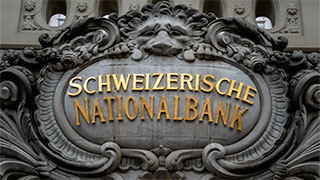
As economists debate whether trade wars will stoke inflation as companies raise prices or produce disinflation by crimping growth, one country is already contending with the consequences of slowing inflation. Switzerland’s annual rate dipped to minus 0.1% in May, which is likely to prompt the Swiss National Bank to cut its official policy rate by 25 basis points to zero at its June 19 meeting — with further cuts into negative territory a distinct possibility.
The central bank has been clear about its determination to counteract the relentless appreciation of the Swiss franc — especially to the euro, the currency of the big economic zone that surrounds Switzerland. The US Treasury in its semi-annual review released Thursday, added Switzerland to its list of nine countries it monitors closely over foreign-exchange practices, but stopped short of accusing it of currency manipulation. SNB President Martin Schlegel has said that negative borrowing costs — which were in place from 2015 to 2022 — are an option, although “no one likes” them. A monetary policy move below zero could come as soon as September, according to Bloomberg Intelligence.
As well as the need to prevent moves in the currency market from trashing Swiss exports, there's a compelling price backdrop also driving SNB interest-rate policy as it worries that disinflation will deteriorate into deflation — a message that the euro zone should pay close attention to. Swiss government bonds out to five years are in negative yield territory, with two-year debt at minus 0.2% and swap rates ever further below zero.
Thus far, just 19 billion francs ($23 billion) of bonds — less than a quarter of all outstanding Swiss government debt — yields less than zero. But that does mean that the era of getting paid to borrow, which looked consigned to history, is back, at least for the Alpine nation.
Negative Yields Had Disappeared
The peak of the negative yield universe was $17.8 trillion in late 2020
So the decline in May inflation in the euro area to to 1.9%, below the European Central Bank's 2% target, should continue to set alarm bells ringing in Frankfurt, especially given the pronounced decline in services costs to to 3.2% from 4% in the prior the month. Goods inflation is much more subdued at 0.6%. This marries with the dramatic fall in first-quarter reported wage settlements to 2.4% from 4.1% in the final quarter of 2024. ECB Chief Economist Philip Lane emphasized the outlook for wages was even more benign. Residual sticky inflation is being shaken out of the euro area fast and explains why the ECB cut its official interest rate for the eighth time on Thursday to 2%, halving the benchmark in the space of a year.
Swiss Inflation Leads The Way Down
France and Italy have lower inflation than the euro area composite
The big question of the summer is whether the ECB can leave monetary policy on pause, with the accompanying risk that consumer prices don’t just slow their increase but start to decline — leaving the euro zone back in the same quandary that left it stricken for a decade after the euro crisis.
The ECB’s quarterly review on Thursday lowered again its growth and inflation forecasts as a result of elevated global trade concerns, lower forward oil prices and the considerably stronger euro. It expects 2026 inflation to average 1.6%, lower than the 1.9% anticipated in its March projections, although somewhat strangely it expects the measure to magically return to 2% in 2027. The risks are evidently skewed to that being weaker. President Christine Lagarde repeated in her press conference that economic growth risks remain tilted to the downside; Deutsche Bank AG Chief European Economist Mark Wall warned in a research note that “the inflation undershoot could deepen and persist.”
ECB Sees Inflation Even Further Below Target in 2026
The central bank cut its forecasts for consumer price increases this year and next
The euro has gained more than 10% against the dollar this year, rising to around $1.14 putting its currency-sensitive export machine under further stress even before the tariffs wars have played out. It’s not as rampant as the indomitable Swiss franc, but further gains are likely which will further subdue growth and inflation; Bloomberg Intelligence Chief G10 FX Strategist Audrey Childe-Freeman reckons “a dovish ECB isn’t likely to alter our $1.15-$1.20 call into the second half.”
Negative rates are now part of the central bank toolbox, albeit a measure that policymakers will be reluctant to implement. As the world’s central banks discovered to their cost just a few short years ago, once consumer prices start to decline it can be awfully hard to revive the animal spirits need to keep growth purring along. The experience of its neighbor Switzerland suggests the euro zone can’t rest easy.
Source: www.bloomberg.com
Aleksei Andrievskii is the founder of the ANDRIEVSKII SEA WEALTH family office in Cyprus, member of the advisory board at Bendura Bank AG, Liechtenstein