

In modern civilization, few things can rival the resilience of the European summer holiday. Empires may quarrel, oil traders may sweat nervously in front of glowing screens, and ministers may deliver grave statements in dark suits — but by July, the beaches of Spain will still be overflowing with sunburned Germans and determined Britons hauling inflatable flamingos through airports.
A war between the United States and Iran is unlikely to stop Europeans from flying. It will, however, force them to pay considerably more for the privilege.
According to Bloomberg, wholesale jet fuel prices in Northwestern Europe and Asia jumped from roughly $100 per barrel before the conflict to more than $230 in early April. Since then, markets have calmed somewhat, and prices have fallen by about 30%, settling near $165 per barrel. The panic has faded, although the fuel bill remains unpleasantly large.
Some airlines have already adjusted their strategy. Cathay Pacific Airways recently reduced fuel surcharges after wholesale prices declined. European carriers, meanwhile, have noticeably strengthened their confidence in fuel availability.
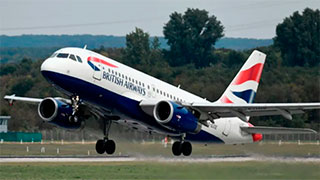
Earlier this month, Luis Gallego, chief executive of IAG SA — the parent company of British Airways — assured journalists that the company does not expect major disruptions in jet fuel supplies during the summer season.
That, however, has not stopped airlines from quietly revising their calculations and raising fares.
The increase is already visible across Europe.
Air France-KLM has raised economy-class ticket prices on long-haul routes by roughly €50 round trip, while short- and medium-haul flights have increased by around €10.
Lufthansa did not publish a single surcharge percentage, but airlines within the group introduced additional environmental and fuel fees ranging from €1 to €72 depending on the route and travel class. At the same time, Lufthansa acknowledged that higher ticket prices would help offset an estimated €1.7 billion increase in fuel expenses.
Meanwhile, Finnair responded more cautiously, relying primarily on route optimization and fare adjustments rather than dramatic public announcements about higher surcharges. Analysts estimate that across Northern Europe, average fare increases on many international summer routes will range between 5% and 12%.
The arithmetic behind these decisions is brutally simple. Airlines consume astonishing quantities of fuel, and fuel has suddenly become extraordinarily expensive. Even after the recent decline, jet fuel still costs roughly 65% more than it did before the war.
Not all routes carry the same level of risk. Flights between the Netherlands and Greece remain relatively secure because both countries export aviation fuel. The Poland–Portugal corridor also appears stable. Austria and Spain possess enough domestic flexibility to avoid immediate concerns.
The position of the United Kingdom and France, however, is more fragile. Britain covers only about a quarter of its jet fuel demand domestically and maintains limited reserves, while France remains a major importer itself. When supply chains tighten, neighboring countries stop behaving like allies and begin resembling gentlemen simultaneously reaching for the last bottle at dinner.
Even so, the market is adapting with impressive speed.
Andrievskii Verdict
The global aviation fuel market appears to be gradually regaining balance.
Refineries around the world are increasing jet fuel production, often by cutting diesel and gasoline output. It is the industrial equivalent of emptying one shelf in the pantry to refill another.
If even half of the world’s refining capacity reaches the level of jet fuel production already achieved by American refineries, additional supply could entirely compensate for Middle Eastern losses.
Europe has already replaced roughly 70% of the aviation fuel it previously imported from the Persian Gulf through additional deliveries from the United States and Africa. A new major refinery in Nigeria has unexpectedly become one of the heroes of the situation, producing record volumes of jet fuel precisely when the market needs it most.
According to estimates from the International Energy Agency, Europe may need oil inventories replenished to 80–90% capacity by June to avoid more serious shortages. Covering the remaining gap could require tapping strategic petroleum reserves.
Under such conditions, inflated ticket prices are less a sign of greed than a reflection of arithmetic.
And for airlines, beneath the smoke of geopolitics lies an uncomfortable glimmer of opportunity. Higher ticket prices, combined with resilient summer demand, will likely strengthen quarterly profits across much of the European aviation sector during the second and third quarters of 2026.
War has always been expensive for travelers. For airlines, however, it sometimes arrives disguised as improved profitability.
Aleksei Andrievskii is the founder of the ANDRIEVSKII SEA WEALTH family office in Cyprus, a member of the advisory board at Bendura Bank AG, Liechtenstein